
Saturday, September 17, 2016

Thursday, August 4, 2016
Korean Alphabet Details Pt4- Aspiration Rule
Watch The Lesson:https://www.youtube.com/watch?v=p87U7_etZIk
I've been mentioning aspiration a few times so I better define it for you. Aspiration is when you blow a little bit of air out of your mouth when you pronounce a letter. Some letters are pronounced by making a very similar mouth shape but they sound different because you aspirate when you say one of them. One such pair is G and K. Hold your hand in front of your mouth and say "guh", then say "kuh". You should notice that your mouth made a very similar movement but you felt more air hitting your hand when you say "kuh". Another pair is D and T. Try saying "duh" and "tuh". You should notice that T is more aspirated. Now try "juh" and "chuh". The CH is more aspirated, isn't it?
Now let's learn the aspiration rule. If there is an H in the batchim plus one of these: G, D, or J in the initial position of the next syllable it will cause the G, D, or J to be pronounced as a K, T, or CH respectively. In other words, the H will cause it to become more aspirated.
Also, if these letters appear in opposite places: the G,or D in the batchim and the H in the initial position you get the same pronunciation. The G becomes a K and the D becomes a T. You will never encounter the J+H combination so you don't have to worry about breaking the batchim rules.


So there is a short lesson for you. Thank you for studying with me!
I've been mentioning aspiration a few times so I better define it for you. Aspiration is when you blow a little bit of air out of your mouth when you pronounce a letter. Some letters are pronounced by making a very similar mouth shape but they sound different because you aspirate when you say one of them. One such pair is G and K. Hold your hand in front of your mouth and say "guh", then say "kuh". You should notice that your mouth made a very similar movement but you felt more air hitting your hand when you say "kuh". Another pair is D and T. Try saying "duh" and "tuh". You should notice that T is more aspirated. Now try "juh" and "chuh". The CH is more aspirated, isn't it?
Now let's learn the aspiration rule. If there is an H in the batchim plus one of these: G, D, or J in the initial position of the next syllable it will cause the G, D, or J to be pronounced as a K, T, or CH respectively. In other words, the H will cause it to become more aspirated.
Also, if these letters appear in opposite places: the G,or D in the batchim and the H in the initial position you get the same pronunciation. The G becomes a K and the D becomes a T. You will never encounter the J+H combination so you don't have to worry about breaking the batchim rules.


So there is a short lesson for you. Thank you for studying with me!
Watch the Lesson:https://www.youtube.com/watch?v=p87U7_etZIk
Wednesday, August 3, 2016
Details of the Korean Alphabet Pt3- Consonant Assimilation: Nasal Assimilation, R/L Assimilation, and Liquidation
WATCH THE LESSON: https://www.youtube.com/watch?v=voyClVHyGHU
In this lesson we will talk about consonant assimilation. Specifically, nasal assimilation, R/L assimilation, and liquidation. Consonant assimilation is when one consonant at the end of a syllable is followed by another consonant at the beginning of a syllable which causes one or both of the consonants to be pronounced differently. This only occurs in specific circumstances involving only some combinations of letters. I will show you which ones you need to learn, but first I think it is best to start out with an example:
합니다
This is a very commonly used Korean word. It basically means "do" and Koreans use it often as an ending for verbs. You will see it lot as you continue studying Korean, but first, let's figure out how to pronounce it.
The first syllable seems to be "HAB" but the ㅂ in the batchim is actually pronounced like P so it is "HAP"
the 2nd syllable is "NI"
the 3rd syllable is "DA"
So, you might think this word is pronounced "HAPNIDA" but, you'd be wrong because this combination of letters is subject to CONSONANT ASSIMILATION. Which means one or both of them get a different pronunciation.
Now let's learn which combinations of letters get their pronunciations changed because of Consonant assimilation.
In the initial position of a following syllable you need to watch out for these letters: "ㅁ", "ㄴ", and "ㄹ". These letters will cause the pronunciation of a consonant in the final position of the previous syllable to change, but only sometimes. It depends on what that final consonant is.
In the final position of the leading syllable, there are many letters you need to watch for. Let me simplify it, as best I can, by describing them as sounds rather than letters. The sounds you need to watch for are the "P", "T", or "K" sounds on the bottom. Now, remember your batchim pronunciation rules there are more than just three letters that can make these sounds. A "P" sound can come from ㅍ,ㅂ, the combination ㅂㅅ, or the combination ㄹㅍ. The "T" sound comes from ㅌ,ㄷ ,ㅊ,ㅈ ,ㅅ, or ㅆ. The " K" sound can come from ㅋ,ㄱ, ㄲ, or the combination ㄹㄱ.
Let's start learning how to pronounce these three sounds when followed by ㅁ, ㄴ, or ㄹ
First the "P" sound. When the "P" sound is followed by an ㅁ the "P" sound is pronounced as an "M" as well.
When the "P" sound is followed by an ㄴ the "P" sound, again, is pronounced as "M", and the ㄴ stays as an "N".
When the "P" sound is followed by an ㄹ once again the "P" sound becomes an "M" sound AND the ㄹ becomes an "N" sound.
Now let's learn what happens to the "T" sound. When it precedes an ㅁ the "T" sound is pronounced like an "N" and the ㅁ remains as an "M".
When the "T" sound is followed by an ㄴ the "T" sound, again, turns into an "N" and the ㄴ remains prounced as an "N"
Now, when the "T" sound precedes an ㄹ the "T" sound turns into an "N" sound once again and the ㄹ is pronounced as an "N" just like what happened when it followed the "P" sound.
Finally, there is the "K" sound. When a "K" sound precedes ㅁ the "K" sound is pronounced as an "NG" and the ㅁ remains as an "M".
When a "K" sound precedes ㄴ it is pronounced as "NG" and the ㄴ remains as "N".
and lastly, when a "K" sound precedes ㄹ the "K" sound once again gets pronounced as "NG" and the ㄹ is pronounced as "N".
Now let's look at a chart of all these cases:

Do you notice a pattern?
The "P" sound turns into an "M" sound when , followed by the ㅁ, ㄴ, or ㄹ
The "T" sound turns into an "N" sound when followed by ㅁ, ㄴ, or ㄹ
The "K" sound turns into an "NG" sound when followed by ㅁ, ㄴ, or ㄹ
ㅁ and ㄴ stay the same, and the ㄹ turns into an "N" sound when preceded by "P", "T", or "K" sounds.
Hopefully, this pattern makes it easy for you to remember. But we're not done yet. ㄹ goes on turning into "N" in the following situations:
When it is preceded by ㅁ and when it is preceded by ㅇ
But, then things take a little twist when ㄹ meets a real ㄴ because...
when an ㄹ either follows or precedes ㄴ it stays as "R/L" and it is the ㄴ which turns into "R/L".

Now let's go back to our example:
합니다
We thought this word might be pronounced HAPNIDA but since we have a "P" sound at the end of one syllable and an "N" sound at the beginning of the next that means: Consonant Assimilation. Let's go back and look at the chart we made and see what it says. According to our chart a "P" sound at the end of a syllable + an ㄴ at the beginning of the next syllable is pronounced as an "M" "N" sound
So these two syllables are pronounced "HAM" "NI"
and the third syllable is still "DA"
This word is pronounced "Hamnida"
So let's sum up the rules for consonant assimilation:
When followed by an ㅁ, ㄴ, orㄹ
a "P" sound turns into "M"
a "T" sound turns into "N"
a "K" sound turns into "NG"
and an ㄹ when preceded by a "P" sound, "T" sound, "K" sound, ㅁ, or ㅇ turns into an "N"
but when ㄹ either precedes or follows a real ㄴ it turns the ㄴ into an "R/L"
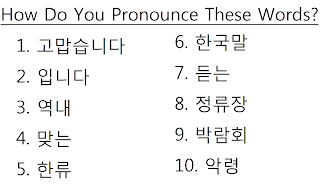
You might find it a little tricky to recognize when you need to use consonant assimilation because you are looking across two syllables and there are 13 different sound combinations you need to watch for. But, as always, I promise to do my best in pointing out and reminding you of these pronunciation rules in future lessons. I also created a chart for you to reference or memorize. Remember it gets easier the more you practice. I made you a list of words that you can try to pronounce using your new found skill of consonant assimilation. Thanks for studying with me.
In this lesson we will talk about consonant assimilation. Specifically, nasal assimilation, R/L assimilation, and liquidation. Consonant assimilation is when one consonant at the end of a syllable is followed by another consonant at the beginning of a syllable which causes one or both of the consonants to be pronounced differently. This only occurs in specific circumstances involving only some combinations of letters. I will show you which ones you need to learn, but first I think it is best to start out with an example:
합니다
This is a very commonly used Korean word. It basically means "do" and Koreans use it often as an ending for verbs. You will see it lot as you continue studying Korean, but first, let's figure out how to pronounce it.
The first syllable seems to be "HAB" but the ㅂ in the batchim is actually pronounced like P so it is "HAP"
the 2nd syllable is "NI"
the 3rd syllable is "DA"
So, you might think this word is pronounced "HAPNIDA" but, you'd be wrong because this combination of letters is subject to CONSONANT ASSIMILATION. Which means one or both of them get a different pronunciation.
Now let's learn which combinations of letters get their pronunciations changed because of Consonant assimilation.
In the initial position of a following syllable you need to watch out for these letters: "ㅁ", "ㄴ", and "ㄹ". These letters will cause the pronunciation of a consonant in the final position of the previous syllable to change, but only sometimes. It depends on what that final consonant is.
In the final position of the leading syllable, there are many letters you need to watch for. Let me simplify it, as best I can, by describing them as sounds rather than letters. The sounds you need to watch for are the "P", "T", or "K" sounds on the bottom. Now, remember your batchim pronunciation rules there are more than just three letters that can make these sounds. A "P" sound can come from ㅍ,ㅂ, the combination ㅂㅅ, or the combination ㄹㅍ. The "T" sound comes from ㅌ,ㄷ ,ㅊ,ㅈ ,ㅅ, or ㅆ. The " K" sound can come from ㅋ,ㄱ, ㄲ, or the combination ㄹㄱ.
Let's start learning how to pronounce these three sounds when followed by ㅁ, ㄴ, or ㄹ
First the "P" sound. When the "P" sound is followed by an ㅁ the "P" sound is pronounced as an "M" as well.
When the "P" sound is followed by an ㄴ the "P" sound, again, is pronounced as "M", and the ㄴ stays as an "N".
When the "P" sound is followed by an ㄹ once again the "P" sound becomes an "M" sound AND the ㄹ becomes an "N" sound.
Now let's learn what happens to the "T" sound. When it precedes an ㅁ the "T" sound is pronounced like an "N" and the ㅁ remains as an "M".
When the "T" sound is followed by an ㄴ the "T" sound, again, turns into an "N" and the ㄴ remains prounced as an "N"
Now, when the "T" sound precedes an ㄹ the "T" sound turns into an "N" sound once again and the ㄹ is pronounced as an "N" just like what happened when it followed the "P" sound.
Finally, there is the "K" sound. When a "K" sound precedes ㅁ the "K" sound is pronounced as an "NG" and the ㅁ remains as an "M".
When a "K" sound precedes ㄴ it is pronounced as "NG" and the ㄴ remains as "N".
and lastly, when a "K" sound precedes ㄹ the "K" sound once again gets pronounced as "NG" and the ㄹ is pronounced as "N".
Now let's look at a chart of all these cases:

Do you notice a pattern?
The "P" sound turns into an "M" sound when , followed by the ㅁ, ㄴ, or ㄹ
The "T" sound turns into an "N" sound when followed by ㅁ, ㄴ, or ㄹ
The "K" sound turns into an "NG" sound when followed by ㅁ, ㄴ, or ㄹ
ㅁ and ㄴ stay the same, and the ㄹ turns into an "N" sound when preceded by "P", "T", or "K" sounds.
Hopefully, this pattern makes it easy for you to remember. But we're not done yet. ㄹ goes on turning into "N" in the following situations:
When it is preceded by ㅁ and when it is preceded by ㅇ
But, then things take a little twist when ㄹ meets a real ㄴ because...
when an ㄹ either follows or precedes ㄴ it stays as "R/L" and it is the ㄴ which turns into "R/L".

Now let's go back to our example:
합니다
We thought this word might be pronounced HAPNIDA but since we have a "P" sound at the end of one syllable and an "N" sound at the beginning of the next that means: Consonant Assimilation. Let's go back and look at the chart we made and see what it says. According to our chart a "P" sound at the end of a syllable + an ㄴ at the beginning of the next syllable is pronounced as an "M" "N" sound
So these two syllables are pronounced "HAM" "NI"
and the third syllable is still "DA"
This word is pronounced "Hamnida"
So let's sum up the rules for consonant assimilation:
When followed by an ㅁ, ㄴ, orㄹ
a "P" sound turns into "M"
a "T" sound turns into "N"
a "K" sound turns into "NG"
and an ㄹ when preceded by a "P" sound, "T" sound, "K" sound, ㅁ, or ㅇ turns into an "N"
but when ㄹ either precedes or follows a real ㄴ it turns the ㄴ into an "R/L"
You might find it a little tricky to recognize when you need to use consonant assimilation because you are looking across two syllables and there are 13 different sound combinations you need to watch for. But, as always, I promise to do my best in pointing out and reminding you of these pronunciation rules in future lessons. I also created a chart for you to reference or memorize. Remember it gets easier the more you practice. I made you a list of words that you can try to pronounce using your new found skill of consonant assimilation. Thanks for studying with me.


Sunday, May 15, 2016
Details of the Korean Alphabet: What I Neglected to Teach You
WATCH THE LESSON:https://www.youtube.com/watch?v=rjaQi5QvwWA
The first five lessons should teach you what you need to know about the Korean alphabet. But, there are a few things I omitted, on purpose, because I think they are more confusing than helpful. However, everyone's brain works different, so perhaps this will be helpful to some people.
Here is one more detail pertaining to the consonant pairs. I taught you that when there are two different consonants in the batchim one of them goes silent. But, what I neglected to teach you, is that the initial consonant of the next syllable in the word is pronounced as if it were doubled. This means you pronounce it with extra emphasis.


I felt like the lesson was complicated enough, and the difference between a single consonant and a double is rather difficult to hear. So, I omitted this detail. But, now you know it. So, keep it in the back of your mind.
Let me clarify something about the batchim. I’ve been talking a lot about the batchim, but in the videos I've been pronouncing it in a highly anglicized way. The word is written like this:
받침
Can you figure out how a Korean speaker would say it? The word batchim is supposed to be pronounced Pawt-cheem. Remember the B at the beginning of a word is pronounced as a P. Then the A is pronounced as an “Awww” not an “Ahhh” Remember the example I gave was “Far”. If you are British you’ve probably been pronouncing your As correctly all along but if you have an American accent then you better watch yourself. You better watch your “Ah”s because it's not “Ah”. It’s “Aw” like in “Far”.
Then, the D in the batchim position sounds like a T.
CH no surprise there,
Then we get to the “tree” vowel. When we translate the Korean letters into Roman letters the “tree” vowel is represented by an “i”. This can be confusing because in English the "i" often sounds like “ih” not “ee”. So, let this be a cautionary tale: if you think you can skip memorizing the Korean alphabet and just rely on Romanization, then you better, at least, memorize the official Romanization. Otherwise, you will be mispronouncing things, and no one will be able to understand you.
Even though pawt-cheem is the proper pronunciation I will continue to call it the batchim. This is an acceptable pronunciation, and I find this title really intuitive. The first time I read the words ‘batchim position’ I automatically thought to myself ‘that must be the one on the bottom’, and whadaya know: it was! But, you may encounter teachers who refer to it as the pawt-cheem position, and now you know what that is too.
I have seen some people teach the batchim rules a little differently than I did. I told you that all these letters: ㅌㄷㅊㅈㅅㅆ sound like T in the batchim, but others say that these letters sound like D in the batchim. The reason for the discrepancy, as I described in an earlier lesson, is that Koreans don't put a big "tuh" at the end of their Ts. So, it does end up sounding a little bit like a D. In fact Koreans do not put a big aspiration at the end of any syllable. So, you will also notice the K sounds a bit like a G. But, bottom line, I think it is better to think of these as an unaspirated T(ㅌㄷㅊㅈㅅㅆ), or unaspirated K(ㅋㄱ). Just thought I would clarify.
On the subject of double consonants I have noticed that ㅃ is often romanized as double P. The interesting thing about P and B is that you do the exact same thing with your lips when you pronounce them. Try it! Say "puh, buh, puh, buh, puh, buh". Notice that you are doing the same thing with your lips. The difference is that you can say "puh" without using your vocal chords. Put your hand on the front of your neck. You can feel your vocal chords vibrating as you talk. Try it! Say “cheese”. You feel that, right? But, there are some letters you can pronounce without making your vocal chords vibrate. Now try to say "puh" without making your vocal chords vibrate. Only use your lips. It is possible, right? Now try to say “buh”. You have to use your vocal chords otherwise you just end up saying “puh” again. That is because B is what we call voiced, and P is unvoiced.
So, I take you through this exercise just to say that P and B are actually very similar letters, and, in somewhat of the same way R and L are combined into the same letter, the ㅃis both a double B, and also a double P.
While we are on the subject of voiced sounds vs unvoiced I think I should point out some other pairs. Put your hand on your neck, again, and say these sounds:

You should be able to say the ones on the right without using your vocal chords.
If you recall a few lessons back we learned that the first letter in a word tends to get different pronunciation. We can now see a pattern here and that pattern is: When a word begins with a voiced consonant it tends to be pronounced as its unvoiced partner. However, there is a subtlety to it. A voiced consonant at the beginning of a word does not sound completely like a the unvoiced version. You can think of it as being less voiced, but not completely unvoiced. It's in this grey area in between the two. You have to practice making a new sound that is in between a B and a P, in between a D and a T, between a J and a CH, between a G and a K. So practice making these new sounds, and pay attention to how native Koreans say them. You'll get the hang of it.
One more pronunciation detail about the letter ㅅ. We learned that it sounds like "s" when it is in the initial position of a syllable. But, we also saw an example of the Korean word "십일" (si bil) where it sounds like "sh". That is because when an ㅅ is followed by this vowel "ㅣ " the one that looks like a tree and sounds like "ee" it makes a "sh" sound, but when followed by any other vowel it makes a "s" sound.

One more thing. I have been calling the Korean letters by the English name of their Roman equivalents, but these Korean letters do actually have names! I just find that the name of the letter is far less important than the sound it makes.When we're talking about vowels the sounds that they make are the names of the letters. But, each consonant has a Korean name. They are listed here. I will continue using the English names for the equivalent letters. If you would like to learn the names then, of course, be my guest.
 WATCH THE LESSON: https://www.youtube.com/watch?v=rjaQi5QvwWA
The first five lessons should teach you what you need to know about the Korean alphabet. But, there are a few things I omitted, on purpose, because I think they are more confusing than helpful. However, everyone's brain works different, so perhaps this will be helpful to some people.
Here is one more detail pertaining to the consonant pairs. I taught you that when there are two different consonants in the batchim one of them goes silent. But, what I neglected to teach you, is that the initial consonant of the next syllable in the word is pronounced as if it were doubled. This means you pronounce it with extra emphasis.

Written like this

Pronounced like this
I felt like the lesson was complicated enough, and the difference between a single consonant and a double is rather difficult to hear. So, I omitted this detail. But, now you know it. So, keep it in the back of your mind.
Let me clarify something about the batchim. I’ve been talking a lot about the batchim, but in the videos I've been pronouncing it in a highly anglicized way. The word is written like this:
받침
Can you figure out how a Korean speaker would say it? The word batchim is supposed to be pronounced Pawt-cheem. Remember the B at the beginning of a word is pronounced as a P. Then the A is pronounced as an “Awww” not an “Ahhh” Remember the example I gave was “Far”. If you are British you’ve probably been pronouncing your As correctly all along but if you have an American accent then you better watch yourself. You better watch your “Ah”s because it's not “Ah”. It’s “Aw” like in “Far”.
Then, the D in the batchim position sounds like a T.
CH no surprise there,
Then we get to the “tree” vowel. When we translate the Korean letters into Roman letters the “tree” vowel is represented by an “i”. This can be confusing because in English the "i" often sounds like “ih” not “ee”. So, let this be a cautionary tale: if you think you can skip memorizing the Korean alphabet and just rely on Romanization, then you better, at least, memorize the official Romanization. Otherwise, you will be mispronouncing things, and no one will be able to understand you.
Even though pawt-cheem is the proper pronunciation I will continue to call it the batchim. This is an acceptable pronunciation, and I find this title really intuitive. The first time I read the words ‘batchim position’ I automatically thought to myself ‘that must be the one on the bottom’, and whadaya know: it was! But, you may encounter teachers who refer to it as the pawt-cheem position, and now you know what that is too.
I have seen some people teach the batchim rules a little differently than I did. I told you that all these letters: ㅌㄷㅊㅈㅅㅆ sound like T in the batchim, but others say that these letters sound like D in the batchim. The reason for the discrepancy, as I described in an earlier lesson, is that Koreans don't put a big "tuh" at the end of their Ts. So, it does end up sounding a little bit like a D. In fact Koreans do not put a big aspiration at the end of any syllable. So, you will also notice the K sounds a bit like a G. But, bottom line, I think it is better to think of these as an unaspirated T(ㅌㄷㅊㅈㅅㅆ), or unaspirated K(ㅋㄱ). Just thought I would clarify.
On the subject of double consonants I have noticed that ㅃ is often romanized as double P. The interesting thing about P and B is that you do the exact same thing with your lips when you pronounce them. Try it! Say "puh, buh, puh, buh, puh, buh". Notice that you are doing the same thing with your lips. The difference is that you can say "puh" without using your vocal chords. Put your hand on the front of your neck. You can feel your vocal chords vibrating as you talk. Try it! Say “cheese”. You feel that, right? But, there are some letters you can pronounce without making your vocal chords vibrate. Now try to say "puh" without making your vocal chords vibrate. Only use your lips. It is possible, right? Now try to say “buh”. You have to use your vocal chords otherwise you just end up saying “puh” again. That is because B is what we call voiced, and P is unvoiced.
So, I take you through this exercise just to say that P and B are actually very similar letters, and, in somewhat of the same way R and L are combined into the same letter, the ㅃis both a double B, and also a double P.
While we are on the subject of voiced sounds vs unvoiced I think I should point out some other pairs. Put your hand on your neck, again, and say these sounds:

You should be able to say the ones on the right without using your vocal chords.
If you recall a few lessons back we learned that the first letter in a word tends to get different pronunciation. We can now see a pattern here and that pattern is: When a word begins with a voiced consonant it tends to be pronounced as its unvoiced partner. However, there is a subtlety to it. A voiced consonant at the beginning of a word does not sound completely like a the unvoiced version. You can think of it as being less voiced, but not completely unvoiced. It's in this grey area in between the two. You have to practice making a new sound that is in between a B and a P, in between a D and a T, between a J and a CH, between a G and a K. So practice making these new sounds, and pay attention to how native Koreans say them. You'll get the hang of it.
One more pronunciation detail about the letter ㅅ. We learned that it sounds like "s" when it is in the initial position of a syllable. But, we also saw an example of the Korean word "십일" (si bil) where it sounds like "sh". That is because when an ㅅ is followed by this vowel "ㅣ " the one that looks like a tree and sounds like "ee" it makes a "sh" sound, but when followed by any other vowel it makes a "s" sound.
Here is a new rule. It's called re-inforcement, or tensification. When you have any of the letters: ㄱㄲㅋㅌㄷㅅㅆㅈㅊㅂor ㅍ in the batchim, or, to put it more simply, a K, T, or P sound followed by one of the 5 letters which can be doubled: ㄱㄷㅂㅈorㅅ in the initial position of the next syllable then these initial consonants are pronounced as if they actually were doubled.


Sunday, May 8, 2016
Details of the Korean Alphabet Pt2: Consonant Pairs AKA Clusters AKA Gyup Batchim
Watch the Lesson by Clicking Here
This lesson is going to cover double consonants, but not the double consonants that we learned about in the last two lessons. We are covering the type of double consonants where there are two different consonants together.
These double consonants are usually found on the bottom of the character block, in the batchim.
To make things easier to talk about in this lesson we will label the positions of the character block like so. The initial position will be called the first position, the next is the second position, and in the batchim the leading consonant will be the third position, and the final consonant will be the fourth position. I know it’s kind of obvious, but I don’t want to confuse anyone unnecessarily.
 When you encounter two different double consonants, usually, the consonant in the fourth position is silent. Except for some combinations that involve ㄹ. Let’s go over, explicitly, some of the most common letter pairs.
ㄴㅈ
The first combo is “N J”. In this letter pair the letter in the fourth position, “J”, is silent.
 ㅂㅅ
ㅂㅅ
We can, also, have “S” in the 4th position and “B” in the third, and, once again, the letter in the 4th position goes silent. We do not pronounce the “S”. This is a good time to mention that the batchim pronunciation rules that we learned in the last lesson are observed so the B sounds like "P".
 ㄴㅎ and ㄹㅎ
Another common letter pair involves H in the 4th position, and either an N or an “RL” in the 3rd. In both these combinations the “H” goes silent.

ㄹㅂ and ㄹㅌ
Finally, we can have an “RL” in the 3rd position. This part is tricky. If the 4th letter is B or T then the same rule we’ve been talking about applies. The 3rd letter is pronounced and the 4th goes silent. So these combinations are pronounced as “L”.
 ㄹㅁ, ㄹㅍ, and ㄹㄱ
But! If the 4th letter is M, P, or G, then the 4th letter is pronounced and the 3rd goes silent. So these combinations are pronounce as M, P, and G BUT with a batchim pronunciation G sounds like "K".
So, in sum, when you have two different letters in the batchim only pronounce the 3rd letter. Unless you have the combination of “RL” with M, P, or G in which case pronounce only the 4th letter.
Remember MPG in combination with R/L. M, P, G. Miles Per Gallon! Or any other memory device you want to use.
 But then, as we’ve seen before, things get more interesting when the next character begins with a “Nothing” consonant.
When this happens the letter in the fourth position moves into the initial position of the next syllable so you end up pronouncing both. This includes the oddball combinations with “RL”, but does not include the combinations involving ㅎ “H”. Let's go through it more slowly and clearly.
When you have N with J and a “nothing” consonant in the initial position of the next syllable you pronounce the N in the bottom of the first syllable, and pronounce the J as if it were in the initial position of the second syllable.
 When you have the BS combination followed by a syllable that begins with the nothing consonant the B is pronounced in the batchim of the first syllable and the S is pronounced in the initial position of the second syllable. Now you may be confused about whether to use batchim pronunciation or normal pronunciation and how it works is like this: The letter which is pronounced in the batchim of the first syllable does get batchim pronunciation, but the letter which is carried over into the initial position of the next syllable does not receive batchim pronunciation. So, in this case, we have the B in the batchim position, so it is pronounced like "P". But, the S has been carried over so it retains normal pronunciation and it sounds like "S".

Now, here is the tricky one. When you have the letter ㅎ(H) it goes silent, and the letter in the 3rd position is carried over. If you have “NH” in the batchim and “Nothing” in the initial position of the next syllable you will pronounce the first syllable with two letters and the next syllable will begin with N. Or If you have “R/L H” the H goes silent and the “R/L” is pronounced in the initial position of the second syllable.
 When you have any of the combinations R/L B or R/L T ( the regular ones ) or R/LM, R/LP, R/LG ( the exceptions) they all follow the same regular rule. The “R/L” is pronounced in the batchim of the first syllable and the B, T, M, P, and G are each carried over into the initial position of the next syllable. And remember the R/L is in the batchim so it sounds more like an L, but the letters in the 4th position are carried over, and so they obey regular pronunciation rules.
 So, in sum, When the next syllable begins with the nothing consonant the letter in the fourth position moves into the initial position of the next syllable so you end up pronouncing both. Unless the 4th letter is “H” in which case the H is not pronounced and the letter in the 3rd position moves into the initial position of the next syllable.
That’s it for this lesson. It is only one concept, but it is a convoluted one. As these double consonants appear in later lessons I will remind you of their pronunciation. Also, there are a few words that break the rules. If we encounter them I’ll do my best to let you know.
Watch the Lesson by Clicking Here
This lesson is going to cover double consonants, but not the double consonants that we learned about in the last two lessons. We are covering the type of double consonants where there are two different consonants together.
These double consonants are usually found on the bottom of the character block, in the batchim.
To make things easier to talk about in this lesson we will label the positions of the character block like so. The initial position will be called the first position, the next is the second position, and in the batchim the leading consonant will be the third position, and the final consonant will be the fourth position. I know it’s kind of obvious, but I don’t want to confuse anyone unnecessarily.

ㄴㅈ
The first combo is “N J”. In this letter pair the letter in the fourth position, “J”, is silent.

We can, also, have “S” in the 4th position and “B” in the third, and, once again, the letter in the 4th position goes silent. We do not pronounce the “S”. This is a good time to mention that the batchim pronunciation rules that we learned in the last lesson are observed so the B sounds like "P".

Another common letter pair involves H in the 4th position, and either an N or an “RL” in the 3rd. In both these combinations the “H” goes silent.

ㄹㅂ and ㄹㅌ
Finally, we can have an “RL” in the 3rd position. This part is tricky. If the 4th letter is B or T then the same rule we’ve been talking about applies. The 3rd letter is pronounced and the 4th goes silent. So these combinations are pronounced as “L”.

But! If the 4th letter is M, P, or G, then the 4th letter is pronounced and the 3rd goes silent. So these combinations are pronounce as M, P, and G BUT with a batchim pronunciation G sounds like "K".
So, in sum, when you have two different letters in the batchim only pronounce the 3rd letter. Unless you have the combination of “RL” with M, P, or G in which case pronounce only the 4th letter.
Remember MPG in combination with R/L. M, P, G. Miles Per Gallon! Or any other memory device you want to use.

When this happens the letter in the fourth position moves into the initial position of the next syllable so you end up pronouncing both. This includes the oddball combinations with “RL”, but does not include the combinations involving ㅎ “H”. Let's go through it more slowly and clearly.
When you have N with J and a “nothing” consonant in the initial position of the next syllable you pronounce the N in the bottom of the first syllable, and pronounce the J as if it were in the initial position of the second syllable.


Now, here is the tricky one. When you have the letter ㅎ(H) it goes silent, and the letter in the 3rd position is carried over. If you have “NH” in the batchim and “Nothing” in the initial position of the next syllable you will pronounce the first syllable with two letters and the next syllable will begin with N. Or If you have “R/L H” the H goes silent and the “R/L” is pronounced in the initial position of the second syllable.


That’s it for this lesson. It is only one concept, but it is a convoluted one. As these double consonants appear in later lessons I will remind you of their pronunciation. Also, there are a few words that break the rules. If we encounter them I’ll do my best to let you know.
Watch the Lesson by Clicking Here
Subscribe to:
Posts (Atom)