
Saturday, September 24, 2016

Saturday, September 17, 2016
Sino Korean Numbering System
Watch The Lesson Here: https://www.youtube.com/watch?v=hLlaE1fASiw
In Korean there are two number systems: the Sino-Korean and the Native Korean or Pure Korean. Which numbering system you use depends on what you are counting.
In this lesson we will learn the Sino Korean numbering system.
The Sino Korean numbering system is used when counting:
age, date, phone numbers, addresses, floors in a building, money, temperature, measurement (such as distance, height, weight, volume), minutes, seconds, but not hours. The Sino Korean numbering system is is also the preferred system for high numbers (over 100)
The Native Korean numbering system, on the other hand, is used for counting:
hours, people and things, and age. (Both systems can be used for telling your age)

So let's learn this Sino Korean numbering system. It's really simple. I can teach you numbers 1 to 999,999,999,999 and you only have to memorize 14 words and do some simple math. When I say simple math I mean REALLY simple math, the easiest math you can imagine.
ALRIGHT! Let's start with zero.
Zero is either yeong or gong. Use yeong most of the time, but people often say gong for things like phone numbers. Much like in English when we often say "oh" instead of zero. You can remember that zero is yeong because, well, if your age is zero, then you are very "young". You can remember zero is gong because a gong is a metal disk that you can hit to make a noise, and its shape is round like a number zero.
Now let's look at the numbers from one to ten. Once we get to ten I'll tell you a little story to help you memorize these first ten numbers easily.

To make it easier to remember these numbers I have a story that you can use. To be honest, I got this idea from another person. Her video is linked HERE and she tells the story, probably, better than I do. OKAY, this is The Story of Young, Silly Sam. Young, silly Sam saw something and said
"oh, yuck!"
His friends, who are accustomed to his over reactions, said
"Chill, pal."
But he insisted, and pointed to was he saw while exclaiming
"GOO SHEEP!"
When his friends turned to look they saw sheep covered in goo.
So let's go over that again:
Young, Silly Sam saw "oh, yuck!" "chill, pal." "GOO SHEEP!"

Now you do have that remember that it is "eel", and not "sill"; and that it is "yook", and not "yuck"; also "cheel", and not "chill". But this story helped me remember the numbers.
Beyond ten is where the simple math comes in. Eleven is just ten plus one. So we call it ten-one:
sip-il 십일
Remember this word? I have used it as an example before. When we have a syllable that begins with a nothing consonant it is pronounced as if the consonant from the bottom of the previous syllable has moved in to the place where the nothing consonant is. Eleven is pronounced "shee-beel" si-bil
and twelve? We call that ten-two: shi-bi 십이
and so on:

This numbering system is beautifully predictable.
Now, how do we say 20? Well, 20 is 2 multiplied by 10 so we call it two-ten.
i-sip
How do we say 21? The same way we do in English. We say 20 then we say 1.
ee sheep eel oh but pronunciation rules
ee shee beel REMEMBER: no sheep eels. eel + sheep = no love
It goes on as predicted.

Then we get to thirty. Well to say twenty we said two-ten. Take a guess at how you say thirty. Yup three-ten
sam sheep
then we can count 31-39 the same method we used 21-29
I bet you won't be surprised to see what the pattern is for multiples of ten up to 90:

Now we're at 100

You can count 100-199 by adding the numbers 1-99 onto baek.
For Example:

Now, to say two hundred it's just like English: say two and say hundred:
i baek
300? sam baek

you now know how to count to 999.
But how do we say thousand?


all the way up! But, let's stop 9,000. Because we can't use this pattern for multiples of 1000 over 9,000.
To say ten thousand we can't do it like English and say ten and thousand. We get a whole new word:


and you can still keep going after that!


up to 1,000,000 and we can still keep the pattern going!

We continue with this pattern: just sticking bigger and bigger numbers in front of tenthousand, or in front of man.
Until we get to tenthousand tenthousand. Man man? NO!

tenthousand multiplied by tenthousand is 100,000,000
and we call that "eok"
You can now say all the numbers up to 999,999,999,999.
You just keep putting bigger numbers infront of eok.
When you get to 1 billion that's si-beok.
How do we say 999,999,999,999
Let's figure it out. First how many 100millions? how many eoks?
answer: 9,999. How do find that number quickly? Well you can think: where is the 100 millions column in this number?
999,999,999,999 right here! and take all the digits in front of that.
999,999,999,999
goocheon goobaek gooship goo eok
That's how many eoks, and now how many mans? How many tenthousands?
Find that 10thousands column and take every digit up to the 100millions digit.
999,999,999,999
goocheon goobaek gooship goo man
and the last part of the number
999,999,999,999
goocheon goobaek gooship goo
So altogether lets say the highest numbr we know in Korean
goocheon goobaek gooship goo eok
goocheon goobaek gooship goo man
goocheon goobaek gooship goo
So, those commas that we like to use in our numbers didnt really help us with the Sino Korean numbering system did they? In English we get a new word every three digits :
999,999,999,999
billion, million, thousand
but in Sino Korean we get a new word every 4 digits. It would be so much easier to see how to pronounce a large number if you put the commas like this
9999,9999,9999
eok, man
But they don't do that! They do it the way we do. Go figure!
Let's review the vocabulary really quick.

Use the story to help you remember how to count to 10. Counting is relatively easy, but being able to recall the numbers at random is something else. You'll know you've really got a hold on this vocabulary when you can recite a list of numbers like this:

Here are some large numbers. figure out how to say them in Korean if you like. Answers are below. If you want more practice you can, of course, come up with your own numbers.

Next lesson is on the Native Korean numbering system. Thanks for studying with me.
In Korean there are two number systems: the Sino-Korean and the Native Korean or Pure Korean. Which numbering system you use depends on what you are counting.
In this lesson we will learn the Sino Korean numbering system.
The Sino Korean numbering system is used when counting:
age, date, phone numbers, addresses, floors in a building, money, temperature, measurement (such as distance, height, weight, volume), minutes, seconds, but not hours. The Sino Korean numbering system is is also the preferred system for high numbers (over 100)
The Native Korean numbering system, on the other hand, is used for counting:
hours, people and things, and age. (Both systems can be used for telling your age)

So let's learn this Sino Korean numbering system. It's really simple. I can teach you numbers 1 to 999,999,999,999 and you only have to memorize 14 words and do some simple math. When I say simple math I mean REALLY simple math, the easiest math you can imagine.
ALRIGHT! Let's start with zero.
Zero is either yeong or gong. Use yeong most of the time, but people often say gong for things like phone numbers. Much like in English when we often say "oh" instead of zero. You can remember that zero is yeong because, well, if your age is zero, then you are very "young". You can remember zero is gong because a gong is a metal disk that you can hit to make a noise, and its shape is round like a number zero.
Now let's look at the numbers from one to ten. Once we get to ten I'll tell you a little story to help you memorize these first ten numbers easily.

To make it easier to remember these numbers I have a story that you can use. To be honest, I got this idea from another person. Her video is linked HERE and she tells the story, probably, better than I do. OKAY, this is The Story of Young, Silly Sam. Young, silly Sam saw something and said
"oh, yuck!"
His friends, who are accustomed to his over reactions, said
"Chill, pal."
But he insisted, and pointed to was he saw while exclaiming
"GOO SHEEP!"
When his friends turned to look they saw sheep covered in goo.
So let's go over that again:
Young, Silly Sam saw "oh, yuck!" "chill, pal." "GOO SHEEP!"

Now you do have that remember that it is "eel", and not "sill"; and that it is "yook", and not "yuck"; also "cheel", and not "chill". But this story helped me remember the numbers.
Beyond ten is where the simple math comes in. Eleven is just ten plus one. So we call it ten-one:
sip-il 십일
Remember this word? I have used it as an example before. When we have a syllable that begins with a nothing consonant it is pronounced as if the consonant from the bottom of the previous syllable has moved in to the place where the nothing consonant is. Eleven is pronounced "shee-beel" si-bil
and twelve? We call that ten-two: shi-bi 십이
and so on:

This numbering system is beautifully predictable.
Now, how do we say 20? Well, 20 is 2 multiplied by 10 so we call it two-ten.
i-sip
How do we say 21? The same way we do in English. We say 20 then we say 1.
ee sheep eel oh but pronunciation rules
ee shee beel REMEMBER: no sheep eels. eel + sheep = no love
It goes on as predicted.

Then we get to thirty. Well to say twenty we said two-ten. Take a guess at how you say thirty. Yup three-ten
sam sheep
then we can count 31-39 the same method we used 21-29
I bet you won't be surprised to see what the pattern is for multiples of ten up to 90:

Now we're at 100

You can count 100-199 by adding the numbers 1-99 onto baek.
For Example:

Now, to say two hundred it's just like English: say two and say hundred:
i baek
300? sam baek

you now know how to count to 999.
But how do we say thousand?


all the way up! But, let's stop 9,000. Because we can't use this pattern for multiples of 1000 over 9,000.
To say ten thousand we can't do it like English and say ten and thousand. We get a whole new word:


and you can still keep going after that!


up to 1,000,000 and we can still keep the pattern going!

We continue with this pattern: just sticking bigger and bigger numbers in front of tenthousand, or in front of man.
Until we get to tenthousand tenthousand. Man man? NO!

tenthousand multiplied by tenthousand is 100,000,000
and we call that "eok"
You can now say all the numbers up to 999,999,999,999.
You just keep putting bigger numbers infront of eok.
When you get to 1 billion that's si-beok.
How do we say 999,999,999,999
Let's figure it out. First how many 100millions? how many eoks?
answer: 9,999. How do find that number quickly? Well you can think: where is the 100 millions column in this number?
999,999,999,999 right here! and take all the digits in front of that.
999,999,999,999
goocheon goobaek gooship goo eok
That's how many eoks, and now how many mans? How many tenthousands?
Find that 10thousands column and take every digit up to the 100millions digit.
999,999,999,999
goocheon goobaek gooship goo man
and the last part of the number
999,999,999,999
goocheon goobaek gooship goo
So altogether lets say the highest numbr we know in Korean
goocheon goobaek gooship goo eok
goocheon goobaek gooship goo man
goocheon goobaek gooship goo
So, those commas that we like to use in our numbers didnt really help us with the Sino Korean numbering system did they? In English we get a new word every three digits :
999,999,999,999
billion, million, thousand
but in Sino Korean we get a new word every 4 digits. It would be so much easier to see how to pronounce a large number if you put the commas like this
9999,9999,9999
eok, man
But they don't do that! They do it the way we do. Go figure!
Let's review the vocabulary really quick.

Use the story to help you remember how to count to 10. Counting is relatively easy, but being able to recall the numbers at random is something else. You'll know you've really got a hold on this vocabulary when you can recite a list of numbers like this:

Here are some large numbers. figure out how to say them in Korean if you like. Answers are below. If you want more practice you can, of course, come up with your own numbers.

Next lesson is on the Native Korean numbering system. Thanks for studying with me.
Watch The Lesson Here: https://www.youtube.com/watch?v=hLlaE1fASiw

Thursday, August 4, 2016
Korean Alphabet Details Pt4- Aspiration Rule
Watch The Lesson:https://www.youtube.com/watch?v=p87U7_etZIk
I've been mentioning aspiration a few times so I better define it for you. Aspiration is when you blow a little bit of air out of your mouth when you pronounce a letter. Some letters are pronounced by making a very similar mouth shape but they sound different because you aspirate when you say one of them. One such pair is G and K. Hold your hand in front of your mouth and say "guh", then say "kuh". You should notice that your mouth made a very similar movement but you felt more air hitting your hand when you say "kuh". Another pair is D and T. Try saying "duh" and "tuh". You should notice that T is more aspirated. Now try "juh" and "chuh". The CH is more aspirated, isn't it?
Now let's learn the aspiration rule. If there is an H in the batchim plus one of these: G, D, or J in the initial position of the next syllable it will cause the G, D, or J to be pronounced as a K, T, or CH respectively. In other words, the H will cause it to become more aspirated.
Also, if these letters appear in opposite places: the G,or D in the batchim and the H in the initial position you get the same pronunciation. The G becomes a K and the D becomes a T. You will never encounter the J+H combination so you don't have to worry about breaking the batchim rules.


So there is a short lesson for you. Thank you for studying with me!
I've been mentioning aspiration a few times so I better define it for you. Aspiration is when you blow a little bit of air out of your mouth when you pronounce a letter. Some letters are pronounced by making a very similar mouth shape but they sound different because you aspirate when you say one of them. One such pair is G and K. Hold your hand in front of your mouth and say "guh", then say "kuh". You should notice that your mouth made a very similar movement but you felt more air hitting your hand when you say "kuh". Another pair is D and T. Try saying "duh" and "tuh". You should notice that T is more aspirated. Now try "juh" and "chuh". The CH is more aspirated, isn't it?
Now let's learn the aspiration rule. If there is an H in the batchim plus one of these: G, D, or J in the initial position of the next syllable it will cause the G, D, or J to be pronounced as a K, T, or CH respectively. In other words, the H will cause it to become more aspirated.
Also, if these letters appear in opposite places: the G,or D in the batchim and the H in the initial position you get the same pronunciation. The G becomes a K and the D becomes a T. You will never encounter the J+H combination so you don't have to worry about breaking the batchim rules.


So there is a short lesson for you. Thank you for studying with me!
Watch the Lesson:https://www.youtube.com/watch?v=p87U7_etZIk
Wednesday, August 3, 2016
Details of the Korean Alphabet Pt3- Consonant Assimilation: Nasal Assimilation, R/L Assimilation, and Liquidation
WATCH THE LESSON: https://www.youtube.com/watch?v=voyClVHyGHU
In this lesson we will talk about consonant assimilation. Specifically, nasal assimilation, R/L assimilation, and liquidation. Consonant assimilation is when one consonant at the end of a syllable is followed by another consonant at the beginning of a syllable which causes one or both of the consonants to be pronounced differently. This only occurs in specific circumstances involving only some combinations of letters. I will show you which ones you need to learn, but first I think it is best to start out with an example:
합니다
This is a very commonly used Korean word. It basically means "do" and Koreans use it often as an ending for verbs. You will see it lot as you continue studying Korean, but first, let's figure out how to pronounce it.
The first syllable seems to be "HAB" but the ㅂ in the batchim is actually pronounced like P so it is "HAP"
the 2nd syllable is "NI"
the 3rd syllable is "DA"
So, you might think this word is pronounced "HAPNIDA" but, you'd be wrong because this combination of letters is subject to CONSONANT ASSIMILATION. Which means one or both of them get a different pronunciation.
Now let's learn which combinations of letters get their pronunciations changed because of Consonant assimilation.
In the initial position of a following syllable you need to watch out for these letters: "ㅁ", "ㄴ", and "ㄹ". These letters will cause the pronunciation of a consonant in the final position of the previous syllable to change, but only sometimes. It depends on what that final consonant is.
In the final position of the leading syllable, there are many letters you need to watch for. Let me simplify it, as best I can, by describing them as sounds rather than letters. The sounds you need to watch for are the "P", "T", or "K" sounds on the bottom. Now, remember your batchim pronunciation rules there are more than just three letters that can make these sounds. A "P" sound can come from ㅍ,ㅂ, the combination ㅂㅅ, or the combination ㄹㅍ. The "T" sound comes from ㅌ,ㄷ ,ㅊ,ㅈ ,ㅅ, or ㅆ. The " K" sound can come from ㅋ,ㄱ, ㄲ, or the combination ㄹㄱ.
Let's start learning how to pronounce these three sounds when followed by ㅁ, ㄴ, or ㄹ
First the "P" sound. When the "P" sound is followed by an ㅁ the "P" sound is pronounced as an "M" as well.
When the "P" sound is followed by an ㄴ the "P" sound, again, is pronounced as "M", and the ㄴ stays as an "N".
When the "P" sound is followed by an ㄹ once again the "P" sound becomes an "M" sound AND the ㄹ becomes an "N" sound.
Now let's learn what happens to the "T" sound. When it precedes an ㅁ the "T" sound is pronounced like an "N" and the ㅁ remains as an "M".
When the "T" sound is followed by an ㄴ the "T" sound, again, turns into an "N" and the ㄴ remains prounced as an "N"
Now, when the "T" sound precedes an ㄹ the "T" sound turns into an "N" sound once again and the ㄹ is pronounced as an "N" just like what happened when it followed the "P" sound.
Finally, there is the "K" sound. When a "K" sound precedes ㅁ the "K" sound is pronounced as an "NG" and the ㅁ remains as an "M".
When a "K" sound precedes ㄴ it is pronounced as "NG" and the ㄴ remains as "N".
and lastly, when a "K" sound precedes ㄹ the "K" sound once again gets pronounced as "NG" and the ㄹ is pronounced as "N".
Now let's look at a chart of all these cases:

Do you notice a pattern?
The "P" sound turns into an "M" sound when , followed by the ㅁ, ㄴ, or ㄹ
The "T" sound turns into an "N" sound when followed by ㅁ, ㄴ, or ㄹ
The "K" sound turns into an "NG" sound when followed by ㅁ, ㄴ, or ㄹ
ㅁ and ㄴ stay the same, and the ㄹ turns into an "N" sound when preceded by "P", "T", or "K" sounds.
Hopefully, this pattern makes it easy for you to remember. But we're not done yet. ㄹ goes on turning into "N" in the following situations:
When it is preceded by ㅁ and when it is preceded by ㅇ
But, then things take a little twist when ㄹ meets a real ㄴ because...
when an ㄹ either follows or precedes ㄴ it stays as "R/L" and it is the ㄴ which turns into "R/L".

Now let's go back to our example:
합니다
We thought this word might be pronounced HAPNIDA but since we have a "P" sound at the end of one syllable and an "N" sound at the beginning of the next that means: Consonant Assimilation. Let's go back and look at the chart we made and see what it says. According to our chart a "P" sound at the end of a syllable + an ㄴ at the beginning of the next syllable is pronounced as an "M" "N" sound
So these two syllables are pronounced "HAM" "NI"
and the third syllable is still "DA"
This word is pronounced "Hamnida"
So let's sum up the rules for consonant assimilation:
When followed by an ㅁ, ㄴ, orㄹ
a "P" sound turns into "M"
a "T" sound turns into "N"
a "K" sound turns into "NG"
and an ㄹ when preceded by a "P" sound, "T" sound, "K" sound, ㅁ, or ㅇ turns into an "N"
but when ㄹ either precedes or follows a real ㄴ it turns the ㄴ into an "R/L"
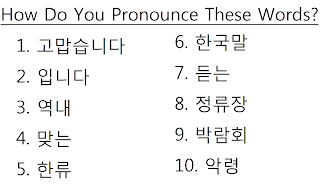
You might find it a little tricky to recognize when you need to use consonant assimilation because you are looking across two syllables and there are 13 different sound combinations you need to watch for. But, as always, I promise to do my best in pointing out and reminding you of these pronunciation rules in future lessons. I also created a chart for you to reference or memorize. Remember it gets easier the more you practice. I made you a list of words that you can try to pronounce using your new found skill of consonant assimilation. Thanks for studying with me.
In this lesson we will talk about consonant assimilation. Specifically, nasal assimilation, R/L assimilation, and liquidation. Consonant assimilation is when one consonant at the end of a syllable is followed by another consonant at the beginning of a syllable which causes one or both of the consonants to be pronounced differently. This only occurs in specific circumstances involving only some combinations of letters. I will show you which ones you need to learn, but first I think it is best to start out with an example:
합니다
This is a very commonly used Korean word. It basically means "do" and Koreans use it often as an ending for verbs. You will see it lot as you continue studying Korean, but first, let's figure out how to pronounce it.
The first syllable seems to be "HAB" but the ㅂ in the batchim is actually pronounced like P so it is "HAP"
the 2nd syllable is "NI"
the 3rd syllable is "DA"
So, you might think this word is pronounced "HAPNIDA" but, you'd be wrong because this combination of letters is subject to CONSONANT ASSIMILATION. Which means one or both of them get a different pronunciation.
Now let's learn which combinations of letters get their pronunciations changed because of Consonant assimilation.
In the initial position of a following syllable you need to watch out for these letters: "ㅁ", "ㄴ", and "ㄹ". These letters will cause the pronunciation of a consonant in the final position of the previous syllable to change, but only sometimes. It depends on what that final consonant is.
In the final position of the leading syllable, there are many letters you need to watch for. Let me simplify it, as best I can, by describing them as sounds rather than letters. The sounds you need to watch for are the "P", "T", or "K" sounds on the bottom. Now, remember your batchim pronunciation rules there are more than just three letters that can make these sounds. A "P" sound can come from ㅍ,ㅂ, the combination ㅂㅅ, or the combination ㄹㅍ. The "T" sound comes from ㅌ,ㄷ ,ㅊ,ㅈ ,ㅅ, or ㅆ. The " K" sound can come from ㅋ,ㄱ, ㄲ, or the combination ㄹㄱ.
Let's start learning how to pronounce these three sounds when followed by ㅁ, ㄴ, or ㄹ
First the "P" sound. When the "P" sound is followed by an ㅁ the "P" sound is pronounced as an "M" as well.
When the "P" sound is followed by an ㄴ the "P" sound, again, is pronounced as "M", and the ㄴ stays as an "N".
When the "P" sound is followed by an ㄹ once again the "P" sound becomes an "M" sound AND the ㄹ becomes an "N" sound.
Now let's learn what happens to the "T" sound. When it precedes an ㅁ the "T" sound is pronounced like an "N" and the ㅁ remains as an "M".
When the "T" sound is followed by an ㄴ the "T" sound, again, turns into an "N" and the ㄴ remains prounced as an "N"
Now, when the "T" sound precedes an ㄹ the "T" sound turns into an "N" sound once again and the ㄹ is pronounced as an "N" just like what happened when it followed the "P" sound.
Finally, there is the "K" sound. When a "K" sound precedes ㅁ the "K" sound is pronounced as an "NG" and the ㅁ remains as an "M".
When a "K" sound precedes ㄴ it is pronounced as "NG" and the ㄴ remains as "N".
and lastly, when a "K" sound precedes ㄹ the "K" sound once again gets pronounced as "NG" and the ㄹ is pronounced as "N".
Now let's look at a chart of all these cases:

Do you notice a pattern?
The "P" sound turns into an "M" sound when , followed by the ㅁ, ㄴ, or ㄹ
The "T" sound turns into an "N" sound when followed by ㅁ, ㄴ, or ㄹ
The "K" sound turns into an "NG" sound when followed by ㅁ, ㄴ, or ㄹ
ㅁ and ㄴ stay the same, and the ㄹ turns into an "N" sound when preceded by "P", "T", or "K" sounds.
Hopefully, this pattern makes it easy for you to remember. But we're not done yet. ㄹ goes on turning into "N" in the following situations:
When it is preceded by ㅁ and when it is preceded by ㅇ
But, then things take a little twist when ㄹ meets a real ㄴ because...
when an ㄹ either follows or precedes ㄴ it stays as "R/L" and it is the ㄴ which turns into "R/L".

Now let's go back to our example:
합니다
We thought this word might be pronounced HAPNIDA but since we have a "P" sound at the end of one syllable and an "N" sound at the beginning of the next that means: Consonant Assimilation. Let's go back and look at the chart we made and see what it says. According to our chart a "P" sound at the end of a syllable + an ㄴ at the beginning of the next syllable is pronounced as an "M" "N" sound
So these two syllables are pronounced "HAM" "NI"
and the third syllable is still "DA"
This word is pronounced "Hamnida"
So let's sum up the rules for consonant assimilation:
When followed by an ㅁ, ㄴ, orㄹ
a "P" sound turns into "M"
a "T" sound turns into "N"
a "K" sound turns into "NG"
and an ㄹ when preceded by a "P" sound, "T" sound, "K" sound, ㅁ, or ㅇ turns into an "N"
but when ㄹ either precedes or follows a real ㄴ it turns the ㄴ into an "R/L"
You might find it a little tricky to recognize when you need to use consonant assimilation because you are looking across two syllables and there are 13 different sound combinations you need to watch for. But, as always, I promise to do my best in pointing out and reminding you of these pronunciation rules in future lessons. I also created a chart for you to reference or memorize. Remember it gets easier the more you practice. I made you a list of words that you can try to pronounce using your new found skill of consonant assimilation. Thanks for studying with me.


Subscribe to:
Posts (Atom)